

Quality Management
Quality management is the process of ensuring products, services and business processes consistently meet customer, regulatory and organisational requirements. Effective quality management helps organisations improve performance, reduce errors, increase customer satisfaction and achieve continual improvement.
Regardless of industry, organisations are expected to deliver reliable outcomes that meet expectations and comply with relevant standards. Quality management provides a structured approach for achieving consistency, managing risks and driving operational excellence.
By implementing strong quality systems and fostering a culture of continual improvement, organisations can improve efficiency, strengthen stakeholder confidence and support long-term business success.
ON THIS PAGE
Quality is about delivering consistent, reliable and customer-focused outcomes through effective processes, continual improvement and strong leadership.
What is Quality Management?
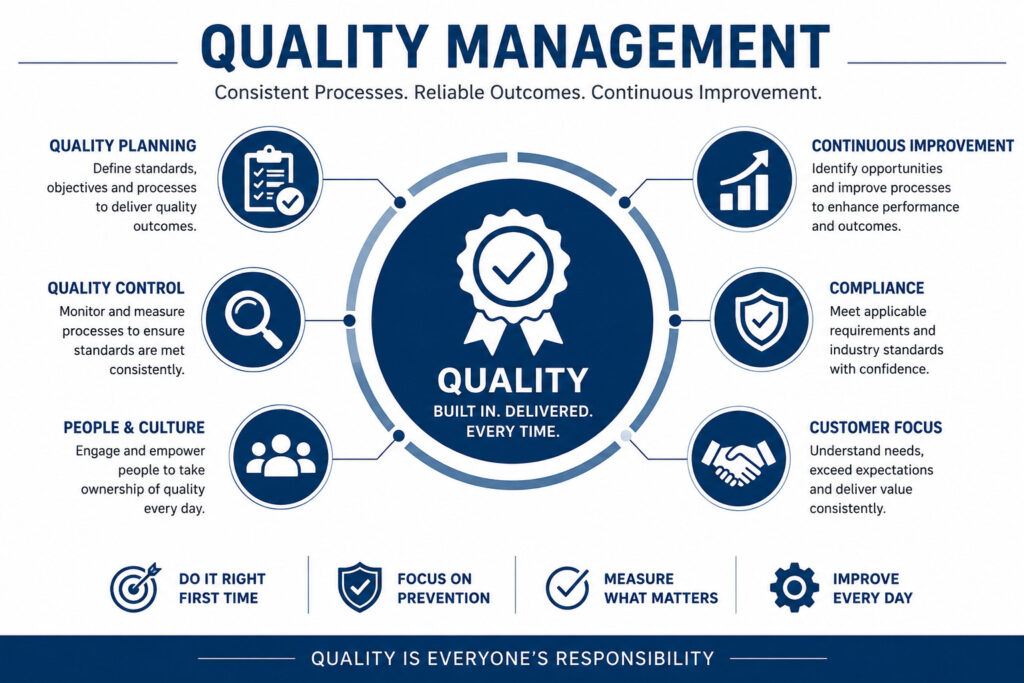
Quality management involves the planning, control, assurance and improvement of processes to ensure consistent and reliable outcomes.
It focuses on understanding customer requirements, establishing effective systems, monitoring performance and continually improving the way work is performed.
Quality is not simply about checking finished products or services. It involves building quality into every stage of a process to prevent errors and ensure requirements are consistently achieved.
A successful quality management approach helps organisations deliver value while reducing waste, rework and inefficiencies.
Why Quality Management is Important
Customers expect products and services to be delivered consistently, safely and in accordance with agreed requirements.
Poor quality can result in:
- Customer complaints
- Rework and delays
- Increased costs
- Lost business opportunities
- Regulatory issues
- Damage to reputation
- Reduced productivity
Strong quality management helps organisations:
- Improve customer satisfaction
- Deliver consistent outcomes
- Reduce errors and defects
- Increase efficiency
- Strengthen compliance
- Improve decision-making
- Support continual improvement
Quality management contributes directly to organisational performance and long-term success.
Quality Planning
Quality planning establishes the processes, standards and objectives required to achieve desired outcomes.
Effective quality planning involves:
- Understanding customer requirements
- Identifying applicable standards
- Defining quality objectives
- Establishing responsibilities
- Developing procedures and controls
- Determining performance measures
Planning quality requirements from the beginning helps prevent issues and supports consistent delivery.
“Quality means doing it right when no one is looking.“
HENRY FORD
Quality Assurance
Quality assurance focuses on providing confidence that processes are capable of consistently meeting requirements.
Quality assurance activities may include:
- Procedure development
- Process reviews
- Audits and inspections
- Competency assessments
- Documentation control
- Supplier evaluations
The purpose of quality assurance is to prevent problems before they occur by ensuring systems and processes are effective.
Quality Control
Quality control involves monitoring and checking outputs to verify they meet specified requirements.
Examples of quality control activities include:
- Product inspections
- Testing and verification
- Process monitoring
- Checklists and verification records
- Sampling and measurement
- Validation activities
Quality control helps identify defects, non-conformances and opportunities for corrective action before products or services reach customers.

Process Management
Every organisation relies on processes to achieve outcomes.
Process management involves understanding how activities interact and ensuring they operate efficiently and effectively.
Effective process management includes:
- Defining process responsibilities
- Identifying inputs and outputs
- Establishing performance measures
- Monitoring effectiveness
- Identifying improvement opportunities
Well-managed processes help reduce variation, improve consistency and increase operational performance.
Document Control
Controlled documentation is essential for maintaining consistency and ensuring workers have access to accurate information.
Document control systems help organisations manage:
- Policies
- Procedures
- Work instructions
- Forms and templates
- Records
- Specifications
Effective document control reduces confusion, improves compliance and supports operational consistency.
Non-Conformance Management
A non-conformance occurs when a product, service, process or activity fails to meet a specified requirement.
Examples may include:
- Defective products
- Incorrect documentation
- Process failures
- Customer complaints
- Missed requirements
Managing non-conformances effectively helps organisations identify issues, determine causes and prevent recurrence.
Prompt identification and resolution of non-conformances contribute to improved quality performance.

Corrective and Preventive Actions
Corrective actions address the causes of existing issues, while preventive actions focus on preventing potential issues before they occur.
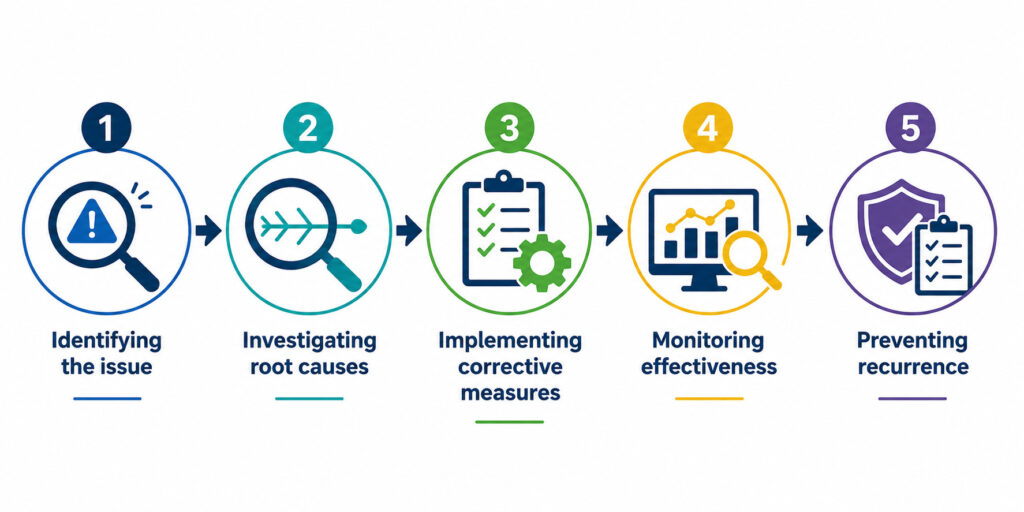
An effective corrective action process typically involves:
- Identifying the issue
- Investigating root causes
- Implementing corrective measures
- Monitoring effectiveness
- Preventing recurrence
Addressing root causes rather than symptoms helps organisations achieve sustainable improvements.
Audits and Quality Reviews
Audits are used to evaluate whether processes and systems are operating as intended.
Quality audits may assess:
- Compliance with procedures
- Regulatory requirements
- Internal standards
- Management system effectiveness
- Opportunities for improvement
Audits provide valuable information that supports continual improvement and strengthens organisational performance.
Continual Improvement
Continual improvement is a core principle of quality management.
Organisations should regularly review performance, identify opportunities for improvement and implement changes that enhance effectiveness.
Improvement activities may include:
- Performance reviews
- Audit findings
- Customer feedback
- Data analysis
- Corrective actions
- Employee suggestions
A commitment to continual improvement helps organisations remain competitive and responsive to changing needs.
Quality Management Systems (QMS)
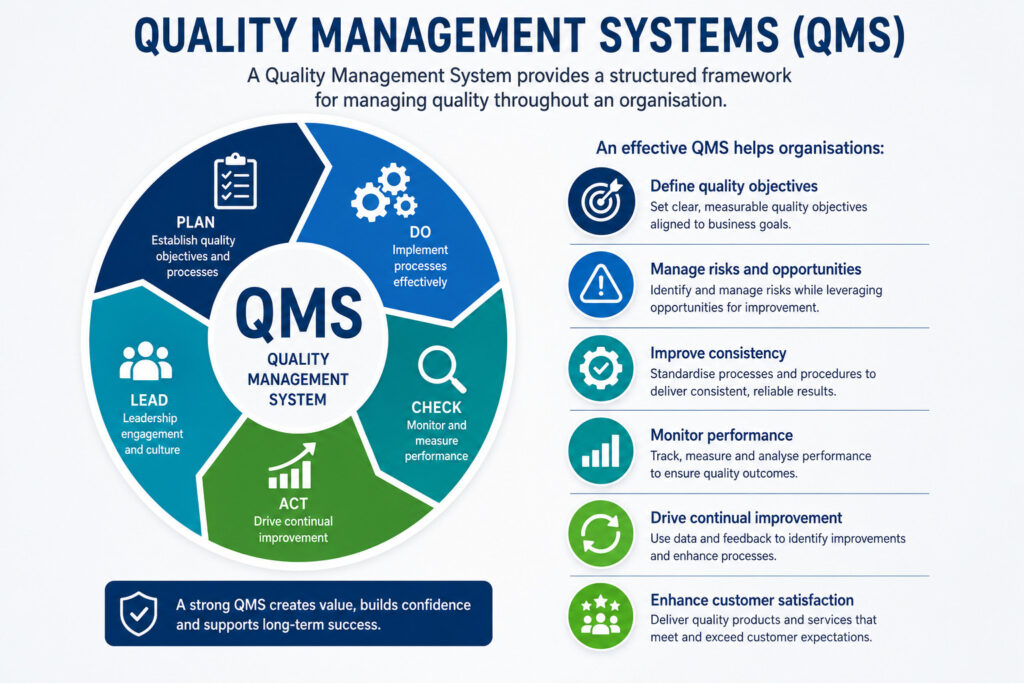
A Quality Management System provides a structured framework for managing quality throughout an organisation.
An effective QMS helps organisations:
- Define quality objectives
- Manage risks and opportunities
- Improve consistency
- Monitor performance
- Drive continual improvement
- Enhance customer satisfaction
Many organisations implement systems aligned with ISO 9001 to establish a recognised and effective quality management framework.
Leadership and Quality Culture
Quality performance is strongly influenced by organisational culture and leadership commitment.
Leaders play an important role in:
- Establishing quality expectations
- Allocating resources
- Supporting continual improvement
- Promoting accountability
- Encouraging employee involvement
When quality becomes part of everyday decision-making, organisations are more likely to achieve consistent and sustainable results.

Best Practice Quality Management Checklist
Effective quality management typically includes:
✓ Clear quality objectives
✓ Defined processes and responsibilities
✓ Quality assurance activities
✓ Quality control measures
✓ Customer feedback mechanisms
✓ Document control systems
✓ Non-conformance management
✓ Corrective action processes
✓ Internal audits and reviews
✓ Continual improvement initiatives

Frequently Asked Questions
What is quality management?
Quality management is the process of ensuring products, services and business processes consistently meet customer, regulatory and organisational requirements.
What is the difference between quality assurance and quality control?
Quality assurance focuses on preventing issues through effective systems and processes, while quality control focuses on checking outputs to ensure requirements have been met.
What is a non-conformance?
A non-conformance occurs when a product, service, process or activity fails to meet a specified requirement or standard.
Why are audits important?
Audits help organisations verify compliance, assess system effectiveness and identify opportunities for improvement.
What is continual improvement?
Continual improvement is the ongoing effort to enhance processes, systems and performance to achieve better outcomes.
What is ISO 9001?
ISO 9001 is an internationally recognised standard that provides a framework for establishing and maintaining an effective Quality Management System.
KEY TAKEAWAYS
- Quality management ensures consistent and reliable outcomes.
- Effective systems help prevent errors, defects and rework.
- Quality is everyone’s responsibility.
- Continuous improvement drives better performance and efficiency.
- Customer satisfaction is at the heart of quality management.
- Strong quality systems support sustainable business success.
Quality management focuses on delivering consistent, reliable and customer-focused outcomes through effective processes, continual improvement and a commitment to excellence.