

Workplace Health
Workplace health focuses on protecting and promoting the physical and psychological wellbeing of workers. A healthy workplace not only prevents work-related illness and injury but also supports employee wellbeing, productivity and long-term organisational success.
Modern workplaces recognise that health extends beyond physical safety. It includes exposure to workplace hazards, mental health, fatigue management, fitness for work, occupational hygiene and the creation of environments that support overall wellbeing.
By proactively identifying health risks and implementing effective controls, organisations can reduce the likelihood of illness, improve workforce performance and create safer, healthier workplaces for everyone.
ON THIS PAGE
Healthy workers are safer, more productive and better equipped to perform their duties. Effective workplace health management reduces risk while supporting wellbeing and organisational performance.
What is Workplace Health?
Workplace health refers to the prevention and management of factors that may negatively affect the health and wellbeing of workers.
These factors may arise from physical, chemical, biological, ergonomic or psychosocial hazards encountered during work activities. Effective workplace health programs focus on identifying risks, implementing controls and supporting workers to maintain good physical and mental health.
A strong workplace health framework helps organisations protect their people while meeting legal obligations and fostering a positive workplace culture.

Why Workplace Health is Important
Healthy workers are more engaged, productive and resilient.
Poor workplace health can result in illness, absenteeism, reduced productivity, increased workers’ compensation claims and significant financial and operational impacts.
Investing in workplace health benefits both workers and organisations by:
- Reducing work-related illness and injury
- Improving employee wellbeing
- Enhancing productivity and performance
- Supporting workforce retention
- Reducing absenteeism and presenteeism
- Strengthening workplace culture
- Improving organisational reputation
Creating healthy workplaces is not only a legal responsibility but also a key contributor to sustainable business success.
Occupational Health Hazards
Many workplace health risks are not immediately visible and may develop over time through repeated exposure.
Common occupational health hazards include:
- Hazardous chemicals and substances
- Dust, fumes and airborne contaminants
- Noise exposure
- Vibration
- Biological hazards
- Manual handling activities
- Poor ergonomics
- Heat and cold exposure
- Radiation
- Fatigue and workload pressures
- Psychosocial hazards
Without appropriate controls, these hazards can contribute to long-term health conditions and reduced worker wellbeing.
A healthy workforce is a productive workforce.
Occupational Hygiene
Occupational hygiene is the science of anticipating, recognising, evaluating and controlling workplace health hazards.
Occupational hygiene programs aim to identify harmful exposures before they affect workers and implement controls that minimise health risks.
Key occupational hygiene activities may include:
- Air monitoring
- Noise assessments
- Dust monitoring
- Exposure assessments
- Hazardous chemical evaluations
- Ventilation assessments
- Health risk reviews
Occupational hygiene plays a critical role in preventing occupational diseases and maintaining safe working environments.
Mental Health and Psychological Wellbeing
Mental health is an essential component of workplace health.
Psychological wellbeing can be affected by workplace factors such as excessive workloads, poor communication, bullying, harassment, low role clarity and exposure to traumatic events.
Organisations can support positive mental health by:
- Promoting respectful workplace behaviours
- Managing psychosocial hazards
- Encouraging open communication
- Providing access to support services
- Supporting work-life balance
- Training leaders and supervisors
- Encouraging early intervention
A mentally healthy workplace contributes to improved wellbeing, engagement and overall organisational performance.

Fatigue Management
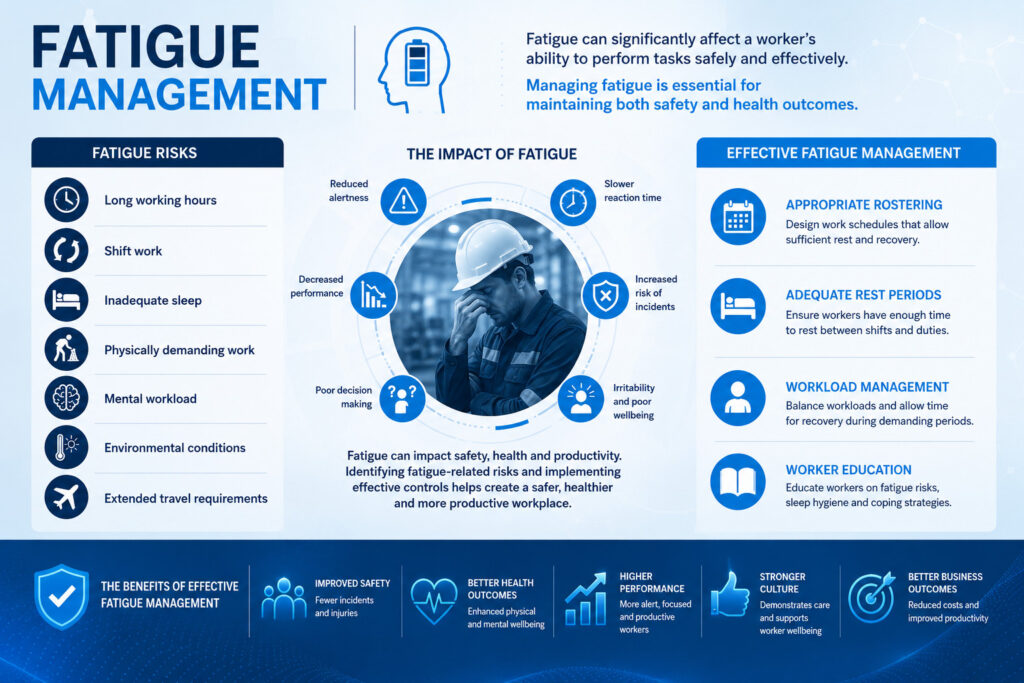
Fatigue can significantly affect a worker’s ability to perform tasks safely and effectively.
Fatigue may result from:
- Long working hours
- Shift work
- Inadequate sleep
- Physically demanding work
- Mental workload
- Environmental conditions
- Extended travel requirements
Effective fatigue management involves identifying fatigue-related risks and implementing controls such as appropriate rostering, adequate rest periods, workload management and worker education.
Managing fatigue is essential for maintaining both safety and health outcomes.
Fitness for Work
Fitness for work refers to a worker’s ability to perform their duties safely and effectively without risk to themselves or others.
Factors that may affect fitness for work include:
- Fatigue
- Illness or injury
- Alcohol and drug use
- Physical capability
- Mental wellbeing
- Medication use
Organisations should establish processes that support workers in being fit for work while ensuring health concerns are managed appropriately and respectfully.

Ergonomics and Musculoskeletal Health
Poor workstation design, repetitive tasks and manual handling activities can contribute to musculoskeletal disorders and workplace injuries.
Ergonomic principles aim to design work tasks, equipment and work environments that suit the capabilities and limitations of workers.
Common ergonomic considerations include:
- Workstation setup
- Manual handling practices
- Repetitive movements
- Posture and positioning
- Tool and equipment design
- Work task variation
Good ergonomic practices help reduce discomfort, injury risk and long-term health issues.
Hazardous Chemicals and Exposure Management
Many workplaces use chemicals that have the potential to impact worker health.
Exposure may occur through inhalation, skin contact or ingestion.
Effective chemical management includes:
- Maintaining Safety Data Sheets (SDS)
- Conducting risk assessments
- Implementing engineering controls
- Providing suitable PPE
- Monitoring exposure levels
- Training workers on safe handling procedures
- Establishing emergency response measures
Managing hazardous chemicals effectively reduces the risk of both short-term and long-term health effects.
Health Monitoring
Health monitoring involves assessing workers’ health to identify potential impacts arising from workplace exposures.
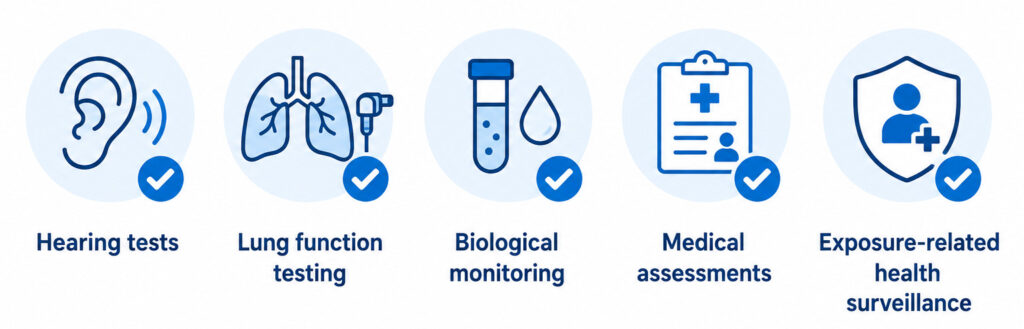
Health monitoring programs may include:
- Hearing tests
- Lung function testing
- Biological monitoring
- Medical assessments
- Exposure-related health surveillance
Health monitoring helps organisations identify emerging health concerns and evaluate the effectiveness of workplace controls.
Workplace Wellbeing Programs
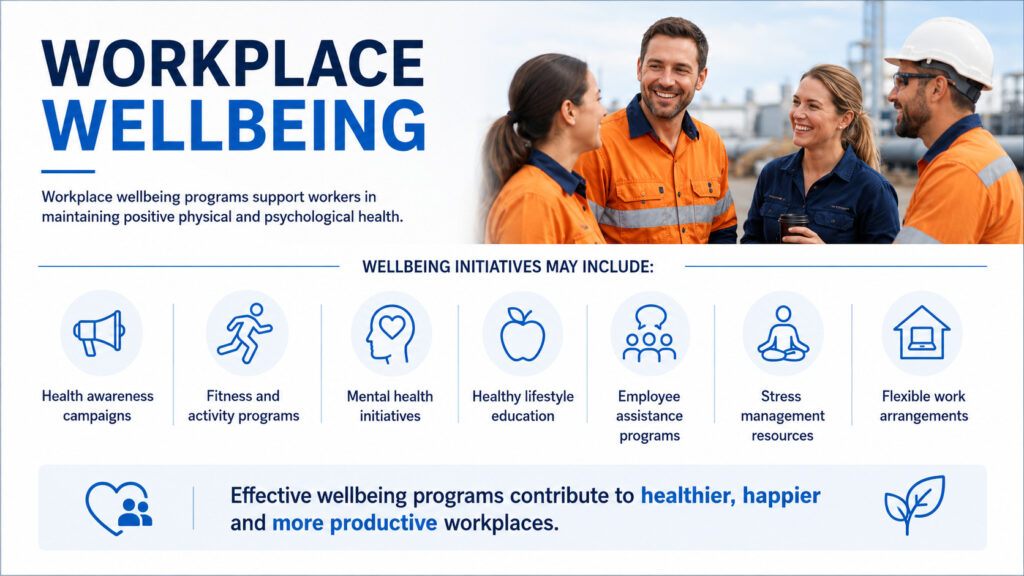
Workplace wellbeing programs support workers in maintaining positive physical and psychological health.
Wellbeing initiatives may include:
- Health awareness campaigns
- Fitness and activity programs
- Mental health initiatives
- Healthy lifestyle education
- Employee assistance programs
- Stress management resources
- Flexible work arrangements
Effective wellbeing programs contribute to healthier, happier and more productive workplaces.
Creating a Positive Health Culture
A strong workplace health culture encourages workers to take an active role in protecting their own health and supporting the wellbeing of others.
Organisations can strengthen health culture by:
- Demonstrating leadership commitment
- Encouraging worker participation
- Providing regular health education
- Supporting early reporting of concerns
- Promoting healthy behaviours
- Continuously reviewing workplace health performance
When health becomes part of everyday workplace decision-making, organisations are better positioned to achieve long-term positive outcomes.
Best Practice Workplace Health Checklist
Effective workplace health management typically includes:
✓ Identification of workplace health hazards
✓ Occupational hygiene monitoring
✓ Mental health and wellbeing initiatives
✓ Fatigue management processes
✓ Fitness for work programs
✓ Ergonomic assessments
✓ Hazardous chemical management
✓ Health monitoring and surveillance
✓ Worker consultation and participation
✓ Continuous improvement activities

Good health is good business.
Frequently Asked Questions
What is workplace health?
Workplace health focuses on protecting and promoting the physical and psychological wellbeing of workers by identifying and controlling health-related hazards and risks.
What is occupational hygiene?
Occupational hygiene is the process of identifying, assessing and controlling workplace exposures that may affect worker health.
Why is mental health important in the workplace?
Mental health affects worker wellbeing, engagement, performance and safety. Managing psychosocial risks helps create healthier and more productive workplaces.
What is fitness for work?
Fitness for work refers to a worker’s ability to safely and effectively perform their duties without posing a risk to themselves or others.
What is health monitoring?
Health monitoring involves assessing workers’ health to identify potential effects from workplace exposures and ensure control measures remain effective.
Who is responsible for workplace health?
Creating healthy workplaces is a shared responsibility involving employers, workers, supervisors and other workplace stakeholders.
KEY TAKEAWAYS
- Workplace health encompasses both physical and psychological wellbeing.
- Healthy workers are more engaged, productive and better equipped to perform their work safely.
- Mental health, fatigue management and occupational hygiene are essential components of an effective workplace health program.
- Identifying and managing health risks early helps prevent illness, injury and long-term adverse outcomes.
- Proactive workplace health initiatives support worker wellbeing, improve organisational performance and strengthen workplace culture.
- Effective health management contributes to safer workplaces, increased productivity and sustainable business success.
- Investing in worker health creates positive outcomes for individuals, teams and organisations alike.
A healthy workforce is the foundation of a safe and productive workplace. Effective workplace health management focuses on identifying health risks, promoting wellbeing and implementing practical measures that protect workers while supporting positive organisational outcomes.