
WHS stands for Work Health and Safety. So, what is WHS?
WHS refers to the laws, systems, policies and practices designed to protect the health, safety and wellbeing of workers and other people who may be affected by work activities.
In Australia, WHS is more than simply preventing workplace injuries. It is a legal framework that requires businesses, employers, workers and other duty holders to identify hazards, manage risks and create safe workplaces.
The goal of WHS is simple: ensure that people return home from work healthy and safe every day.
Why is WHS Important?
Every workplace contains hazards that have the potential to cause injury, illness or harm. These hazards may be physical, chemical, biological, ergonomic or psychosocial.
Effective WHS management helps organisations:
- Prevent workplace injuries and illnesses
- Reduce incidents and lost time injuries
- Improve worker wellbeing
- Meet legal obligations
- Increase productivity and efficiency
- Strengthen workplace culture
- Protect business reputation
A strong WHS culture benefits both workers and businesses by creating safer, healthier and more productive workplaces.
The Australian WHS Framework
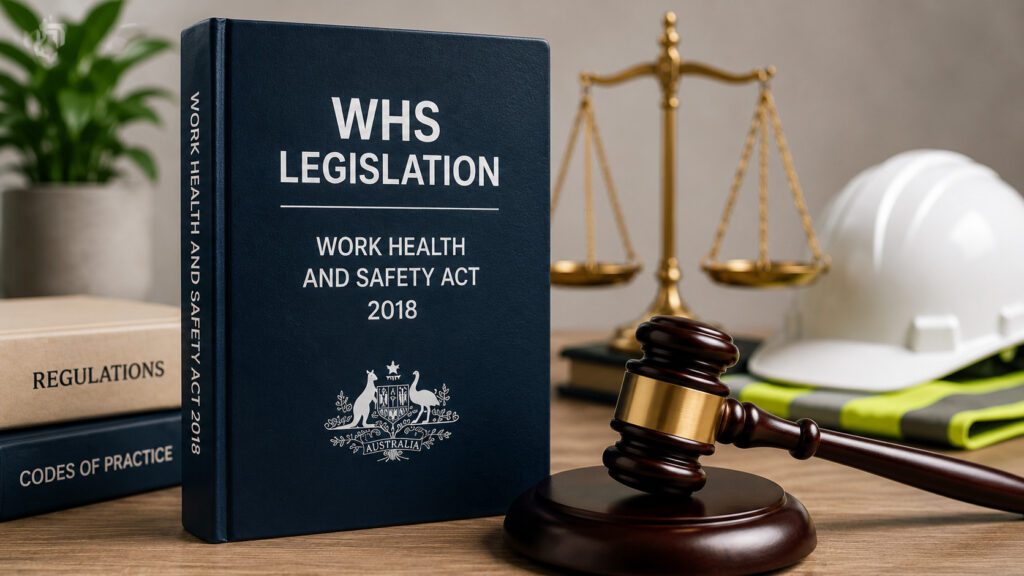
Australia’s WHS system is largely based on the Model Work Health and Safety (WHS) Laws developed by Safe Work Australia. These model laws provide a nationally consistent framework for managing workplace health and safety across most Australian jurisdictions. Victoria operates under a separate occupational health and safety legislative framework.
The WHS framework consists of three key elements:
1. WHS Act
The WHS Act establishes the legal duties and responsibilities of duty holders within a workplace.
The primary objective of the Act is to protect workers and other persons from harm by requiring risks to be eliminated or minimised so far as is reasonably practicable. The Act also promotes consultation, cooperation, training, education and effective enforcement of workplace safety obligations.
2. WHS Regulations
The WHS Regulations provide detailed requirements that support the duties contained within the WHS Act.
They outline specific obligations relating to areas such as:
- Risk management
- High-risk work
- Hazardous chemicals
- Construction work
- Plant and equipment
- Electrical safety
- Incident notification
- Licensing and permits
The Regulations explain what businesses must do to comply with their legal obligations in practical situations.
3. Codes of Practice
Safe Work Australia has developed Model Codes of Practice that provide practical guidance on how to achieve compliance with WHS legislation.
Common examples include:
- Managing Work Health and Safety Risks
- Consultation, Cooperation and Coordination
- Construction Work
- Managing the Work Environment and Facilities
- Hazardous Manual Tasks
- Managing Psychosocial Hazards at Work
While Codes of Practice are not legislation themselves, approved Codes may be used by regulators and courts as evidence of what is considered reasonably practicable in managing workplace risks. Following an approved Code will generally help demonstrate compliance with WHS duties.
Who Has Duties Under WHS Laws?
Work health and safety is everyone’s responsibility. The WHS Act places duties on various people within a workplace.
Person Conducting a Business or Undertaking (PCBU)
A PCBU is the primary duty holder under WHS legislation.
A PCBU may include:
- Companies
- Sole traders
- Partnerships
- Government agencies
- Not-for-profit organisations
PCBUs must ensure, so far as is reasonably practicable, the health and safety of workers and others affected by their work activities. This includes providing:
- Safe workplaces
- Safe systems of work
- Safe plant and equipment
- Information, training and supervision
- Adequate facilities
- Health and workplace monitoring where required
Importantly, the definition of health includes both physical and psychological health.
Officers
Officers of a business, such as company directors and senior managers, must exercise due diligence to ensure the organisation complies with its WHS obligations.
This includes understanding WHS risks, ensuring resources are available and verifying that safety systems are operating effectively.
Workers
Workers have a duty to:
- Take reasonable care for their own health and safety
- Take reasonable care that their actions do not adversely affect others
- Follow reasonable instructions
- Comply with workplace policies and procedures
Other Persons
Visitors, contractors and members of the public must also take reasonable care for their own safety and comply with reasonable workplace instructions.
What Does “Reasonably Practicable” Mean?
One of the most important concepts in WHS legislation is the requirement to do what is “reasonably practicable”.
This means duty holders must take steps that are reasonably able to be done to eliminate or minimise risks after considering factors such as:
- The likelihood of the hazard occurring
- The potential severity of harm
- What is known about the hazard and available controls
- The availability and suitability of controls
- The cost of implementing controls relative to the risk
Businesses are expected to take proactive measures to manage risks rather than waiting for incidents to occur.
Consultation is a Legal Requirement
A key feature of WHS legislation is the requirement for consultation.
PCBUs must consult with workers who may be affected by health and safety matters and, where applicable, consult, cooperate and coordinate activities with other duty holders who share WHS responsibilities. Effective consultation helps identify hazards, improve decision-making and strengthen workplace safety outcomes.
Common WHS Activities in the Workplace
Examples of WHS activities include:
- Risk assessments
- Hazard identification
- Incident reporting and investigation
- Workplace inspections
- Safety training
- Toolbox talks
- Emergency planning
- Safe work procedures
- Contractor management
- Health monitoring
- Mental health and psychosocial risk management
These activities help organisations meet their legal obligations and continuously improve workplace safety performance.
WHS is About More Than Compliance
While legal compliance is important, effective WHS goes beyond simply meeting minimum requirements.
Organisations with mature WHS systems focus on:
- Leadership and safety culture
- Worker engagement
- Continuous improvement
- Proactive risk management
- Learning from incidents and near misses
- Supporting both physical and psychological wellbeing
When safety becomes part of everyday operations, workplaces become safer, more productive and more resilient.
SUMMARY
Work Health and Safety (WHS) is the framework that helps protect people from harm at work. Through the WHS Act, WHS Regulations and Codes of Practice, Australian businesses are required to manage workplace risks and provide safe systems of work. Whether you are a business owner, manager, supervisor or worker, understanding your WHS responsibilities is essential. A strong WHS culture not only supports legal compliance but also creates healthier, safer and more successful workplaces for everyone.