
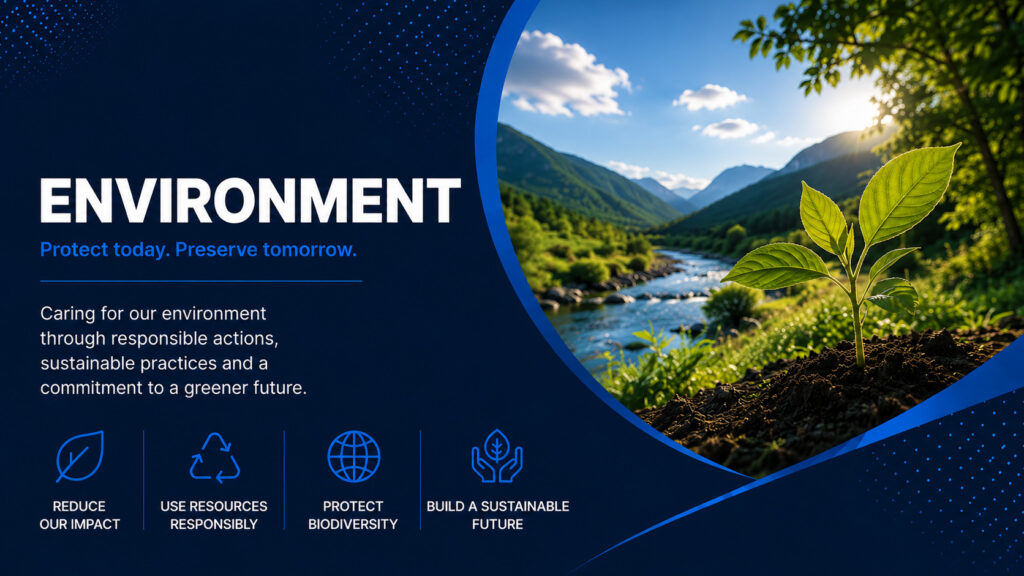
environmental management
Environmental management is the process of identifying, controlling and reducing the impact that workplace activities have on the environment. Every organisation, regardless of size or industry, has a responsibility to operate in a way that protects natural resources, prevents pollution and complies with environmental obligations.
Effective environmental management helps businesses minimise waste, reduce costs, improve sustainability and demonstrate responsible corporate practices. It also supports legal compliance, enhances reputation and contributes to long-term business success.
Whether operating in construction, mining, manufacturing, transport, healthcare or office-based environments, organisations can benefit from implementing practical environmental management systems and controls that reduce environmental risks while supporting operational objectives.
ON THIS PAGE
What is Environmental Management?
Environmental management involves planning, implementing and monitoring activities that minimise environmental harm while supporting sustainable business operations.
The goal is to identify environmental aspects associated with workplace activities and implement controls that prevent or reduce negative impacts. This may include managing waste, reducing emissions, protecting waterways, conserving resources and ensuring compliance with environmental legislation.
Environmental management is most effective when it is integrated into everyday business activities rather than treated as a separate function. By considering environmental impacts during planning, decision-making and operational processes, organisations can achieve better environmental and business outcomes.
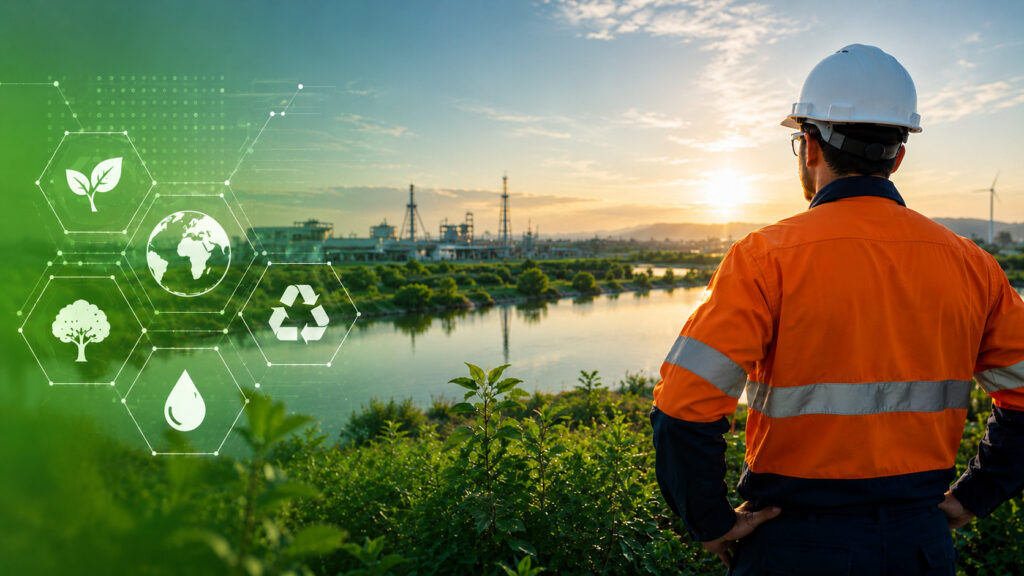
Environmental Risks and Impacts
Every workplace activity has the potential to affect the environment. Understanding these impacts is the first step in managing environmental risk.
Common environmental risks include:
- Air pollution and dust generation
- Water contamination and sediment runoff
- Fuel, oil and chemical spills
- Excessive waste generation
- Noise and vibration impacts
- Land contamination
- Greenhouse gas emissions
- Excessive energy and water consumption
- Impacts on flora, fauna and biodiversity
Environmental incidents can result in regulatory action, project delays, clean-up costs, reputational damage and harm to local communities. Identifying environmental risks early allows organisations to implement effective controls and reduce the likelihood of environmental harm.
Environmental Compliance
Organisations must comply with environmental laws, regulations and licence conditions relevant to their operations.
Environmental compliance involves understanding legal obligations, implementing controls, maintaining records and regularly reviewing environmental performance.
Compliance requirements may relate to:
- Waste management
- Pollution prevention
- Chemical storage and handling
- Hazardous substances
- Water management
- Air emissions
- Noise control
- Land disturbance activities
- Environmental reporting obligations
Maintaining compliance requires ongoing monitoring, employee awareness and continuous improvement to ensure environmental obligations are consistently met.
Protecting the environment through practical, sustainable solutions.
Waste Management
Waste management is one of the most important components of environmental performance.
Effective waste management focuses on reducing waste generation, maximising reuse and recycling opportunities and ensuring waste is disposed of responsibly.
The waste hierarchy provides a practical framework for decision-making:
- Avoid waste where possible.
- Reduce waste generation.
- Reuse materials.
- Recycle suitable materials.
- Recover resources or energy.
- Dispose of waste responsibly.
By adopting waste minimisation strategies, organisations can reduce environmental impacts while often achieving significant cost savings.
Pollution Prevention
Preventing pollution is far more effective than responding to environmental incidents after they occur.
Pollution prevention strategies may include:
- Spill prevention measures
- Secondary containment systems
- Erosion and sediment controls
- Dust suppression methods
- Waste segregation practices
- Equipment maintenance programs
- Chemical management procedures
- Stormwater protection measures
A proactive approach helps protect the environment while reducing the risk of regulatory breaches and costly remediation activities.

Sustainability in the Workplace
Sustainability focuses on meeting current business needs without compromising the ability of future generations to meet their own needs.
Workplace sustainability initiatives may include:
- Reducing energy consumption
- Improving water efficiency
- Minimising waste
- Sustainable procurement practices
- Reducing carbon emissions
- Supporting circular economy principles
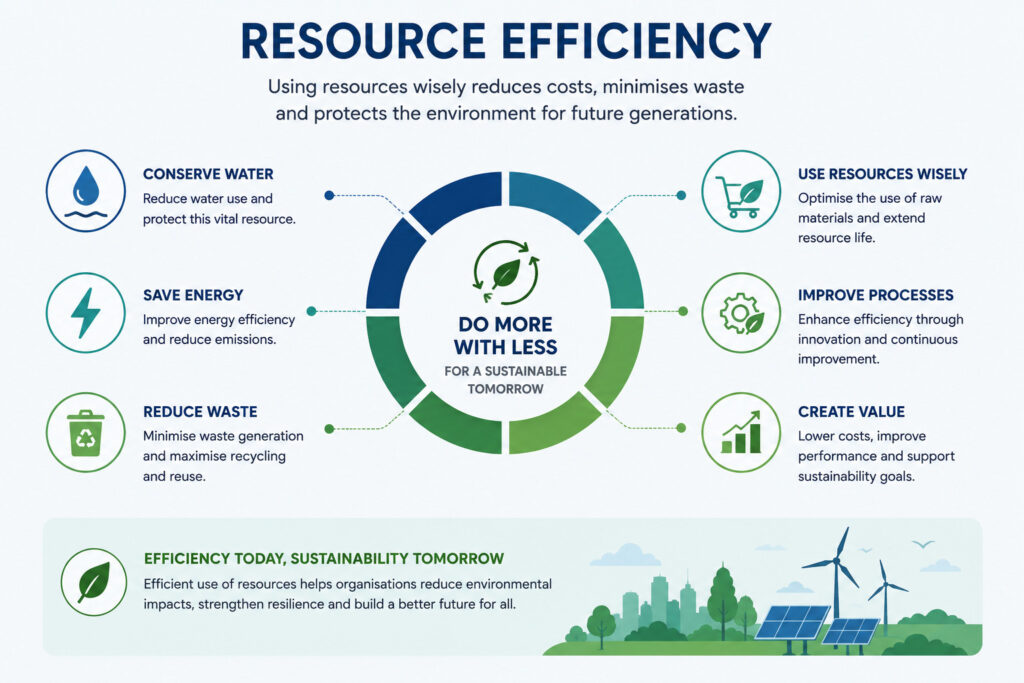
- Improving resource efficiency
Sustainable business practices not only benefit the environment but can also improve operational efficiency, reduce costs and strengthen stakeholder confidence.
Environmental Monitoring and Performance
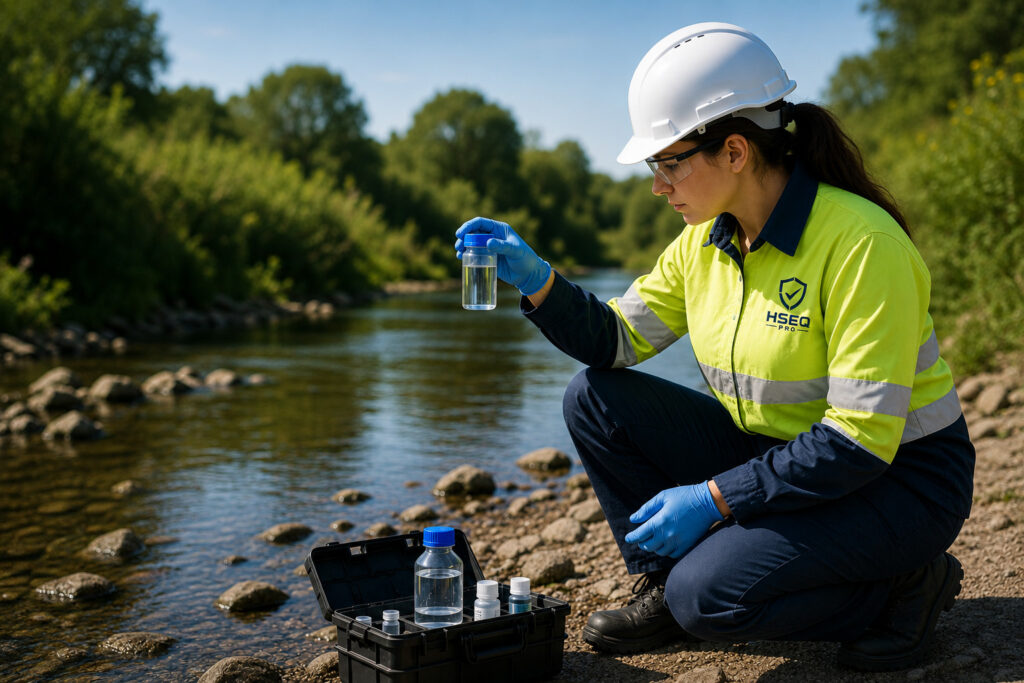
Monitoring environmental performance allows organisations to measure the effectiveness of environmental controls and identify opportunities for improvement.
Environmental monitoring may include:
- Water quality testing
- Air quality monitoring
- Noise monitoring
- Waste tracking
- Energy consumption monitoring
- Water usage monitoring
- Environmental inspections
- Environmental audits
Regular monitoring provides valuable information that supports informed decision-making and continuous improvement.
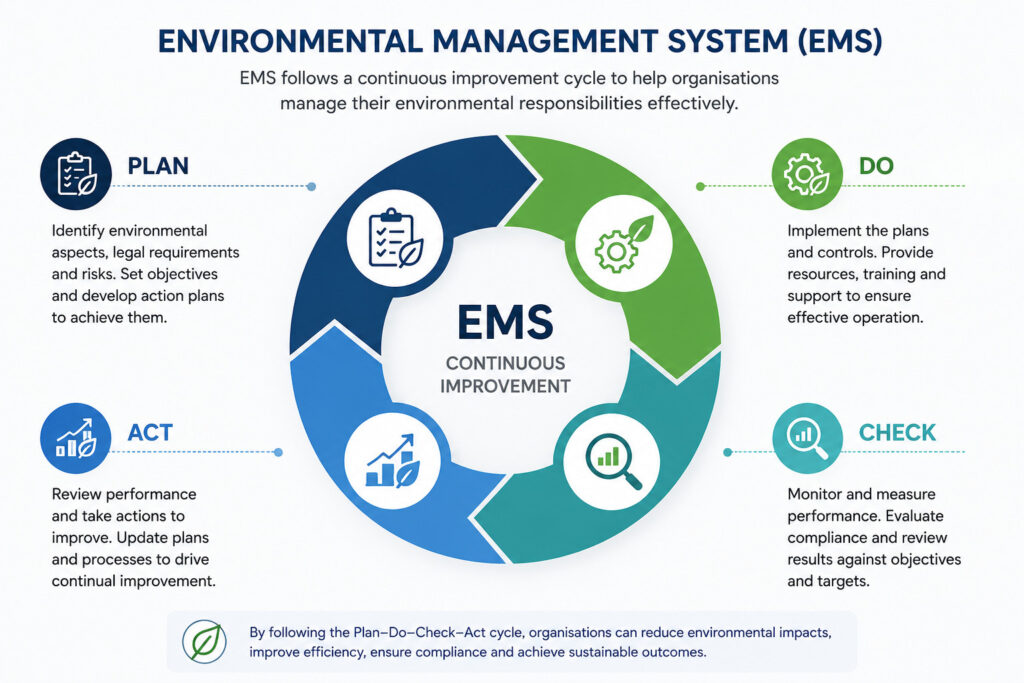
Environmental Management Systems (EMS)
An Environmental Management System provides a structured framework for managing environmental responsibilities.
A well-designed EMS helps organisations:
- Identify environmental aspects and impacts
- Establish objectives and targets
- Implement environmental controls
- Monitor performance
- Meet compliance obligations
- Drive continual improvement
Many organisations adopt environmental management systems aligned with ISO 14001 to provide a consistent and systematic approach to environmental management.
Environmental Awareness and Responsibility
Environmental performance is influenced by the actions and decisions of every worker.
Creating a positive environmental culture involves:
- Providing environmental training and awareness
- Encouraging reporting of environmental issues
- Promoting responsible resource use
- Supporting continuous improvement initiatives
- Recognising positive environmental behaviours
When employees understand their environmental responsibilities, organisations are better positioned to achieve sustainable outcomes.
Best Practice Environmental Management Checklist
Effective environmental management typically includes:
✓ Identification of environmental risks and impacts
✓ Compliance with environmental obligations
✓ Waste minimisation and recycling initiatives
✓ Pollution prevention controls
✓ Resource conservation measures
✓ Environmental monitoring programs
✓ Environmental training and awareness
✓ Incident reporting and investigation processes
✓ Regular audits and inspections
✓ Continuous improvement activities

Frequently Asked Questions
Why is environmental management important?
Environmental management helps organisations reduce environmental impacts, comply with legal requirements, improve sustainability and enhance business performance.
What are environmental aspects and impacts?
Environmental aspects are elements of workplace activities that interact with the environment. Environmental impacts are the resulting changes to the environment caused by those activities.
What is the purpose of ISO 14001?
ISO 14001 provides a framework for establishing, implementing and improving an Environmental Management System.
How can workplaces reduce environmental impacts?
Workplaces can reduce impacts through waste minimisation, pollution prevention, efficient resource use, environmental monitoring and continuous improvement initiatives.
What industries need environmental management?
Environmental management is relevant to all industries, including construction, mining, manufacturing, transport, healthcare, government, retail and office-based businesses.
KEY TAKEAWAYS
- Environmental management helps organisations identify, control and reduce the environmental impacts of their activities.
- Effective environmental management supports legal compliance, sustainability and responsible business practices.
- Common environmental risks include pollution, waste generation, resource consumption, emissions and impacts on land, water and biodiversity.
- Proactive measures such as waste reduction, pollution prevention and environmental monitoring help minimise environmental harm.
- Environmental Management Systems (EMS) provide a structured framework for managing environmental responsibilities and driving continual improvement.
- Employee awareness, participation and leadership commitment are essential for achieving positive environmental outcomes.
- Integrating environmental considerations into everyday operations can improve efficiency, reduce costs and strengthen organisational reputation.
Environmental management is essential for reducing environmental impacts, achieving compliance and supporting sustainable business operations. By identifying risks, implementing controls and pursuing continual improvement, organisations can protect the environment while improving operational performance and long-term business success.